
Tummy Time by Age: How Long, How Often & How to Make It Easier
Tummy time is one of the most common things new parents ask about. Here's what the American Academy of Pediatrics recommends, plus what to do if your little one protests.
Why tummy time matters
Babies sleep on their backs, which is the safest sleeping position. Awake time on their tummies balances that out. It builds the neck, shoulder, and arm strength babies need to roll, sit up, and crawl, and it helps prevent flat spots on the back of the head.
When to start
The AAP says you can start tummy time the day your baby comes home from the hospital. For newborns, that can simply mean lying tummy-down on your chest while you recline.
How long and how often
First weeks: 2 to 3 short sessions a day, about 3 to 5 minutes each.
By 7 weeks: work up to 15 to 30 minutes total per day, spread across sessions.
After that: keep adding time as your baby enjoys it. Short, frequent sessions beat one long struggle.
5 tips if your baby hates tummy time
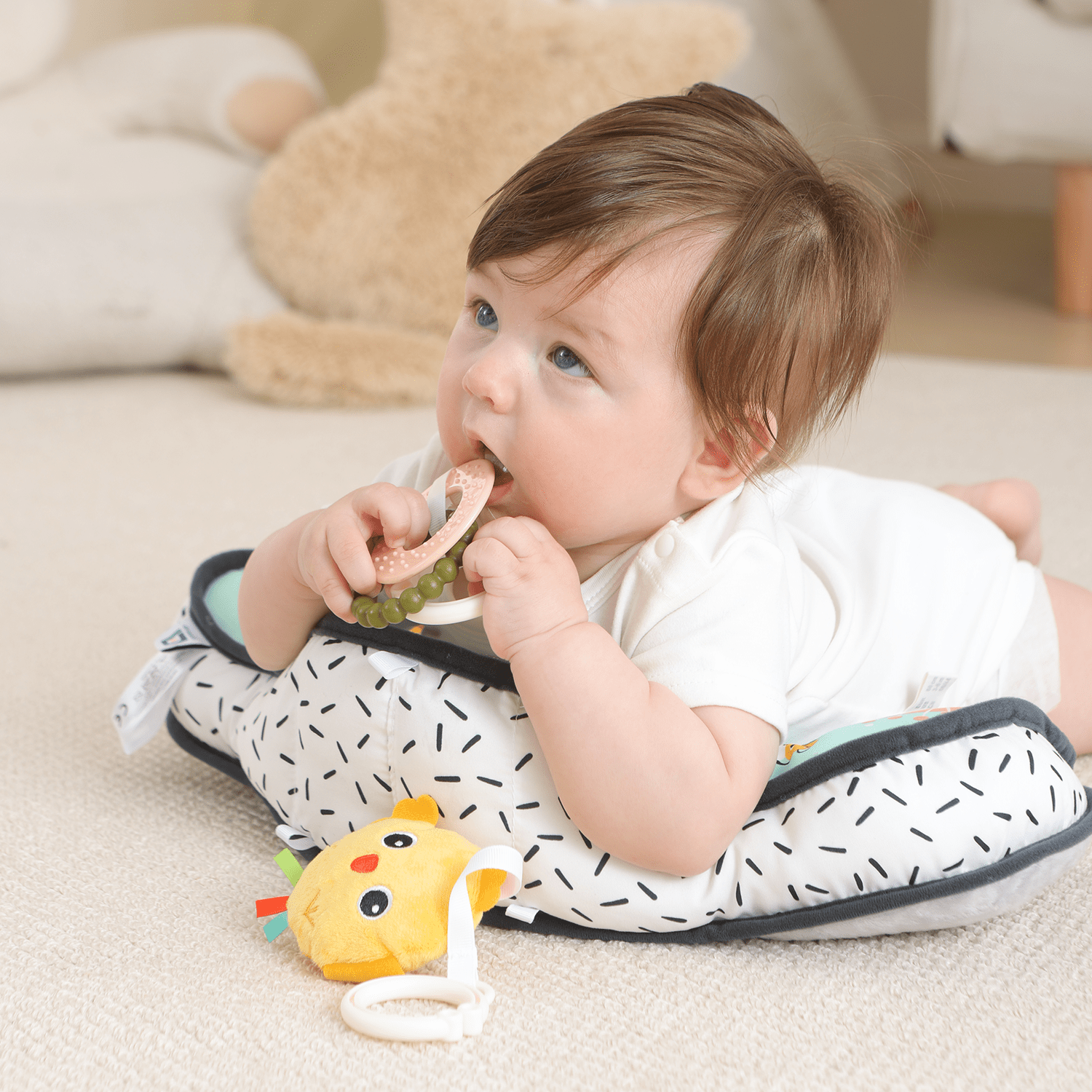
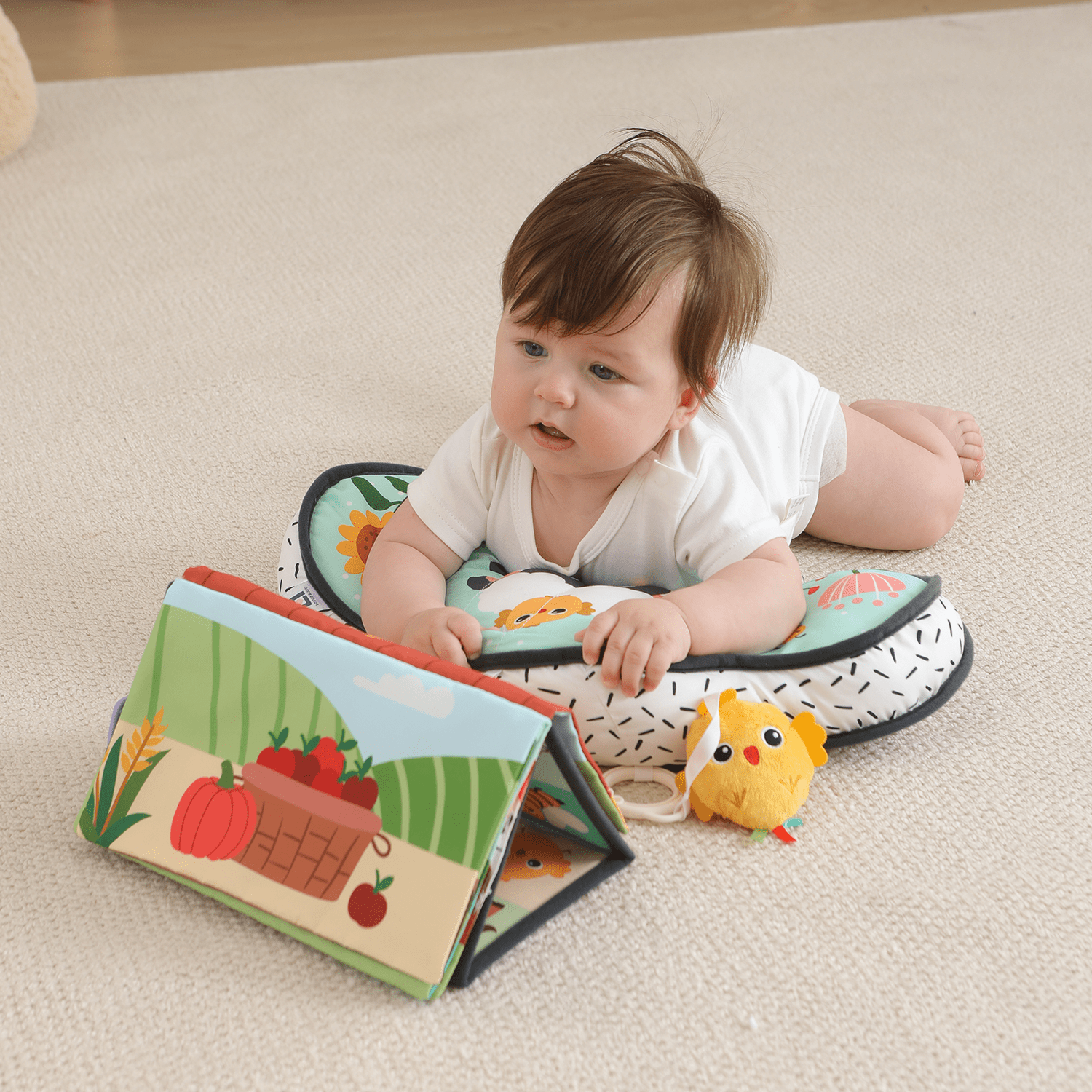
Add a little lift. A firm support pillow under the chest makes it easier to raise the head and see the world. Our 2-in-1 tummy time pillows do this, then convert to a seated support pillow later.
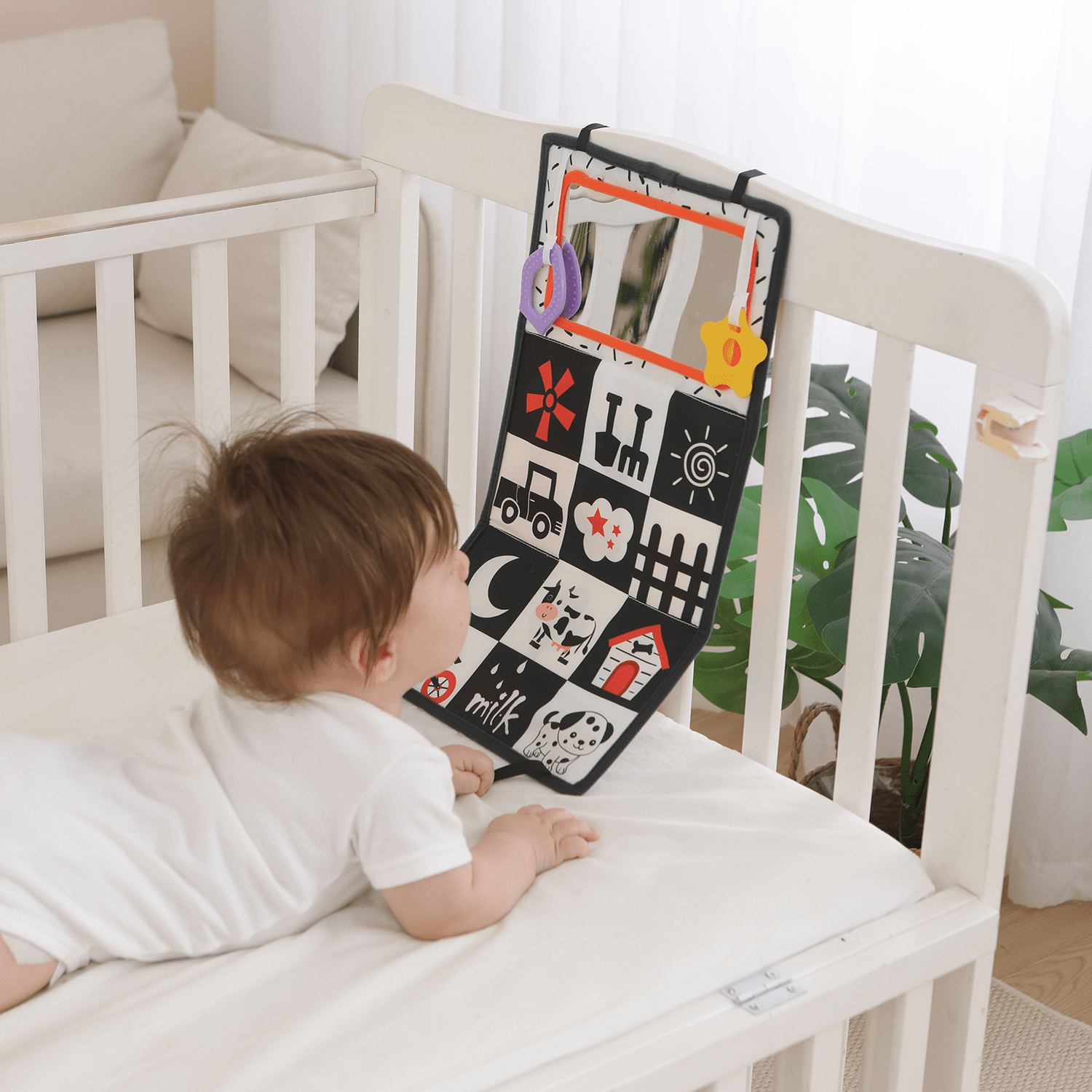
Use high-contrast images. Newborns see bold black-and-white patterns best. Prop a high-contrast book in front of them.
Get down to their level. Your face is their favorite toy. Lie on the floor facing them and talk or sing.
Time it well. Try after a diaper change or nap, not right after a feed.
Try a mirror. Babies love watching the "other baby." The mirror book in our Tummy Time Essential Kit is made for this.
Safety first
Tummy time is always supervised and always awake. Never let your baby sleep on their tummy or on a pillow, and move them to their back in a crib if they get drowsy.
The bottom line
Start early, keep sessions short, and build up to 15–30 minutes a day by about 7 weeks. A few minutes at a time adds up fast.
Source: American Academy of Pediatrics, HealthyChildren.org — Back to Sleep, Tummy to Play